OpenClaw in 2026: Is the Hype Dead, or Just Growing Up?
OpenClaw broke every GitHub record in early 2026 — then the headlines went quiet. So is the hype dead, or did the project just grow up? Here's the 2026 verdict.

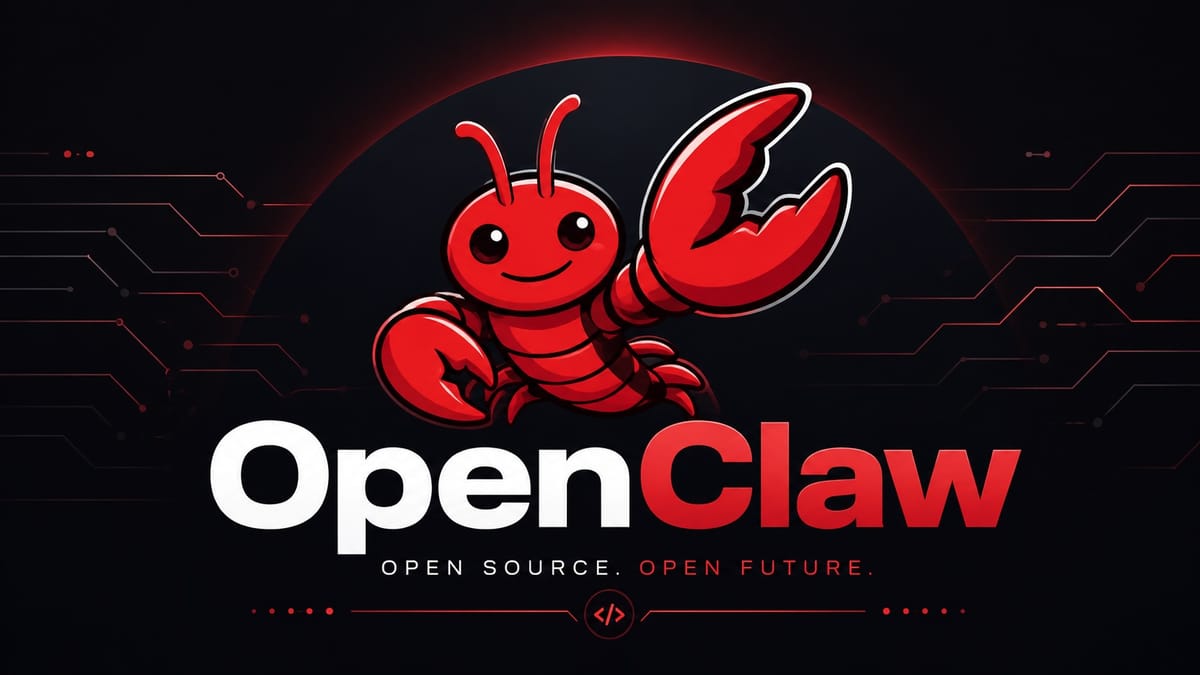
Few open-source projects have ever burned as bright as OpenClaw. In early 2026 it became the fastest-growing repository in GitHub history, blowing past 250,000 stars in roughly 60 days — a milestone React needed over a decade to reach. But months after the peak, the honest question is: does anyone still care?
From Clawdbot to OpenClaw: a quick recap
OpenClaw is an open-source autonomous AI agent built by Austrian developer Peter Steinberger — nicknamed the "ClawFather" — best known for founding PDF toolkit PSPDFKit, which he ran for 13 years before selling it for a reported ~$100M. What started as a late-2025 weekend playground project became a global phenomenon in weeks.
Unlike a chatbot, OpenClaw doesn't just talk. It acts as the "hands" for whatever model you plug in — Claude, GPT, Gemini, or a local Ollama setup. It breaks a goal into subtasks, takes screenshots, drives your mouse and keyboard, remembers what it has done, and talks to you through your favourite messaging app. Built in TypeScript and Swift under an MIT license, it runs cross-platform on macOS, Windows, and Linux.
The timeline: a 72-hour rebrand and a record-breaking climb
| Date | Milestone |
|---|---|
| Nov 2025 | First commit by Peter Steinberger (initially "Clawdbot") |
| Jan 27, 2026 | Renamed to Moltbot after a trademark clash with Anthropic |
| Jan 30, 2026 | Final rename to OpenClaw |
| Early Feb 2026 | Passes 100,000 GitHub stars; ~2M visitors in a single week |
| Feb 15, 2026 | Steinberger joins OpenAI; project moves to an independent foundation |
| Mar 3, 2026 | Hits 250,000 stars — surpassing React's 10-year total in ~60 days |
| Mar 2026 | Security crisis peaks; China restricts state-agency use |
| Mid-2026 | 375,000+ stars; weekly stable releases; reliability-first roadmap |
OpenClaw at a glance (2026)
| Metric | Status |
|---|---|
| GitHub stars | 375,000+ |
| Forks | ~78,000 |
| License | MIT (open source) |
| Governance | Independent OpenClaw Foundation (OpenAI-supported) |
| Supported models | Claude, GPT, Gemini, Ollama, OpenRouter |
| Integrations | 50+ (WhatsApp, Telegram, Slack, Discord, Signal, MS Teams) |
| Skills registry | ClawHub — 13,000+ community-built skills |
| Latest release line | 2026.6.x (weekly stable cadence) |
So, is the hype dead?
Yes and no.
The viral, consumer-grade frenzy has clearly cooled. After a wave of security disclosures — malicious third-party skills, over-permissioned agents, and phishing repos riding the name — "OpenClaw is dead" became a recurring forum headline. China restricted state agencies from running it, demand for Mac Minis (which run it best) briefly emptied shelves in Shenzhen, and rising compute costs quietly pushed casual users away.
But "quieter" is not "dead." The repository now sits above 375,000 stars, ships stable releases almost weekly, and has pivoted hard toward reliability: stronger agent recovery, audit trails, MCP validation, cron fixes, and an upcoming LTS roadmap. After Steinberger joined OpenAI, the project moved into the independent OpenClaw Foundation — modelled on the Ghostty Foundation — signalling permanence, not abandonment.
The conversation simply shifted from "look what it can do" to "can I trust it in production" — which is exactly what mature tooling looks like.
The security question
OpenClaw's biggest liability is also a sign of how much scrutiny it attracts. In its first five months the team received 1,142 security advisories — about 16.6 per day, roughly twice the rate of the Linux kernel. Steinberger's team closed around 60%, noting that many were duplicates or low-quality AI-generated reports. The project also partnered with VirusTotal to scan ClawHub skills for malware.
The lesson for operators is blunt: an agent wired into your email, files, and browser in one session is a junior employee with root access. Powerful, but only as safe as the guardrails you give it.
OpenClaw vs the alternatives
The success spawned a wave of rivals — but none has inherited OpenClaw's mindshare.
| Project | Backer | Notes |
|---|---|---|
| OpenClaw | OpenClaw Foundation | The open-source standard; 375K+ stars |
| Kimi Claw | Moonshot AI | Browser-based fork, launched Feb 2026 |
| Hermes Agent | Nous Research | Learning-loop agent; ~95K stars in 7 weeks |
| Computer Use | Anthropic | Polished commercial alternative |
What this means for you
If you tried OpenClaw at the hype peak and walked away, the 2026 version is a different animal: less stunt, more infrastructure. The rule of thumb hasn't changed, though — sandbox it, audit its skills, and lock down permissions. Done right, it still delivers genuine automation value for solo founders and small teams.
The verdict
The hype bubble popped, but the project didn't. OpenClaw has moved from viral darling to a serious — if cautious — layer in the AI-agent stack. The headlines moved on; the commits did not.
FAQ
Is OpenClaw still being maintained in 2026?
Yes. It ships regular stable releases and is now governed by the independent OpenClaw Foundation, with continued support from OpenAI.
Is OpenClaw safe to use?
It can be, with discipline. Run it sandboxed, restrict permissions, and only install vetted ClawHub skills.
What can OpenClaw actually do?
Manage email, automate workflows, run scripts, and act across messaging apps — using any LLM you choose as its brain.
Who created OpenClaw?
Austrian developer Peter Steinberger, founder of PSPDFKit, who joined OpenAI in February 2026.